The Operational Constraint of Gas Fees in Onboarding
Gas fees introduce a structural constraint in Web3 onboarding. Users must hold native tokens before performing their first on-chain action.
This requirement exists outside the application experience. It forces users to:
- Acquire tokens
- Transfer funds
- Manage balances before interaction
For consumer and enterprise applications, the onboarding flow is interrupted. Users encounter infrastructure requirements before accessing product functionality.
Onboarding slows down, and drop-off increases before the first transaction is completed. Improving onboarding requires removing the dependency on pre-funded gas balances. This is where gasless transaction infrastructure becomes relevant.
What Are Gasless Transactions in Production Systems
Gasless transactions do not eliminate transaction costs. They change how and where those costs are handled.
In a standard transaction, the user pays gas fees directly. In a gasless transaction model, the application or infrastructure layer sponsors the cost.
An Ethereum gasless transaction shifts responsibility for gas payment from the user to the system executing the transaction.
From a production perspective, this enables:
- Users to interact without holding native tokens
- Transactions to be initiated immediately after onboarding
- Application-controlled transaction flows
Gasless transactions are therefore not a pricing feature. They are an infrastructure capability that removes a dependency from the user journey.
Why Ethereum Gasless Transactions Require New Infrastructure
The traditional Ethereum transaction model is built around Externally Owned Accounts (EOAs).
EOAs require the account holder to:
- Sign transactions
- Pay gas fees directly
This model does not support third-party gas sponsorship in a flexible or programmable way.
Gasless execution requires:
- Programmable accounts
- Abstraction of transaction validation and execution
This is enabled by account abstraction.
Smart accounts introduce a programmable execution layer that enables deterministic transaction control via infrastructure. Within this model, gas payment logic can be separated from the user.
This separation creates the foundation for gasless transactions in production systems.
ERC-4337 Paymaster: Execution Infrastructure for Gas Sponsorship
An ERC 4337 paymaster is an execution infrastructure that sponsors transaction gas for users or applications.
It operates within the account abstraction flow, working alongside smart accounts and bundlers.
A paymaster is responsible for:
- Validating whether a transaction should be sponsored
- Applying rules for gas payment
- Covering the execution cost when conditions are met
Instead of requiring users to hold ETH, the paymaster funds the transaction during execution.
This allows applications to control:
- Who receives gas sponsorship
- Under what conditions are transactions executed
- How costs are managed across user flows
The paymaster is not a UI-level feature. It is part of the execution layer that determines how transactions are processed in production.
How Paymasters Actually Work in Production
In a production environment, gasless transactions follow a structured execution flow:
- A user interacts with the application
- The smart account generates a transaction request (UserOperation)
- The paymaster evaluates the request against defined rules
- If approved, the paymaster attaches sponsorship data
- The bundler processes the request and submits it on-chain
- The paymaster funds the gas cost during execution
This flow moves gas management away from the user and into infrastructure. The application defines the conditions for execution. The infrastructure enforces and executes those conditions.
From the user’s perspective, the transaction completes without requiring gas ownership. From the system’s perspective, execution remains fully controlled and auditable.
Types of Gasless Transaction Models Enabled by Paymasters
Paymasters support multiple transaction models depending on application requirements.
Full Gas Sponsorship
The application covers all transaction costs.
Users interact without direct gas handling.
Conditional Sponsorship
Gas is sponsored based on predefined rules:
- First transaction free
- Specific actions sponsored
- Usage thresholds applied
Token-Based Gas Payment
Users pay fees in application-specific tokens instead of native assets.
The paymaster handles conversion and execution.
Subscription-Based Execution
Applications sponsor transactions for users under subscription models.
Gas costs are managed as part of product pricing.
These models allow teams to align transaction execution with product design and business logic.
Production Considerations for Gasless Transactions
Gasless transactions introduce operational requirements that must be handled at the infrastructure level.
Cost Control
Unrestricted sponsorship can lead to uncontrolled spending.
Paymasters must enforce limits and policies.
Abuse Prevention
Systems must detect and prevent spam or malicious usage of sponsored transactions.
Transaction Reliability
Execution must remain predictable under varying network conditions.
Policy Enforcement
Clear rules must define:
- Who can trigger transactions
- What actions are sponsored
- When sponsorship applies
Failure Handling
Systems must manage cases where:
- Transactions are rejected
- Sponsorship conditions are not met
In production environments, gasless execution must behave deterministically.
This requires controlled infrastructure, not ad hoc implementations.
Paymasters in the Context of Onboarding Systems
Gas fees create a dependency that delays onboarding. Paymasters remove this dependency.
With gasless execution:
- Users do not need to pre-fund wallets
- Transactions can occur immediately after signup
- Onboarding flows remain inside the application
This aligns with modern product expectations.
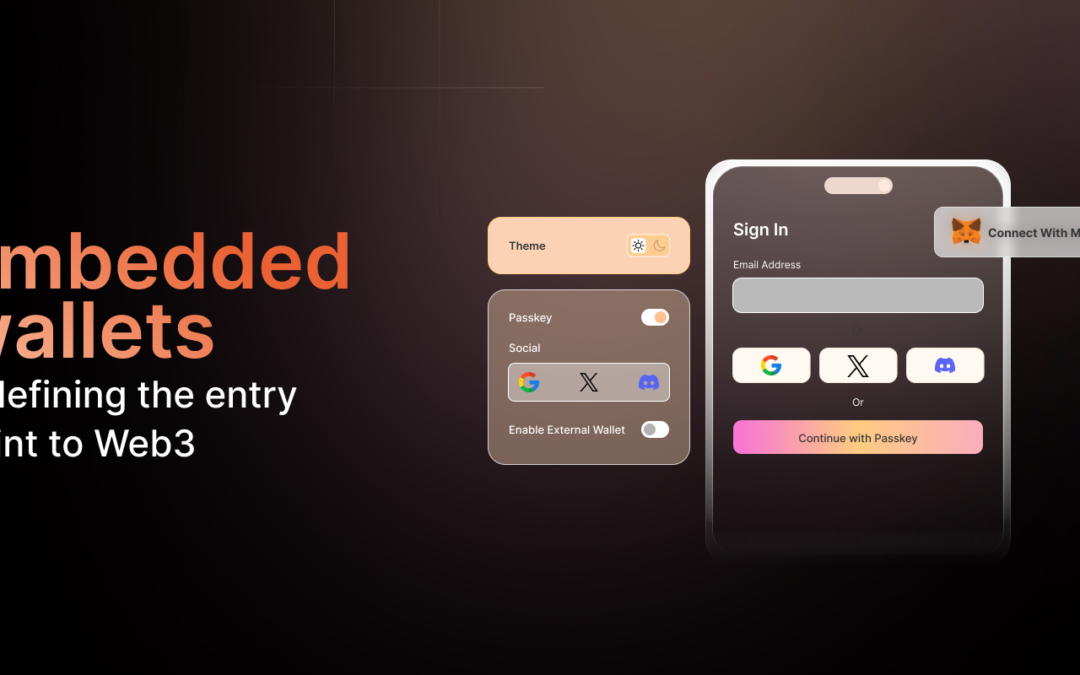
When combined with embedded wallets and authentication-based access:
- Wallet creation becomes part of onboarding
- Transaction execution becomes immediate
- Blockchain interaction becomes application-native
Paymasters enable this shift by removing the requirement for users to manage gas.
Infrastructure Requirements Beyond Paymasters
Paymasters operate within a broader execution system.
Gasless transactions in production require:
- Smart accounts for programmable execution
- Bundlers for transaction processing
- Wallet provisioning systems
- Authentication-integrated onboarding flows
Each component plays a role in ensuring:
- Execution reliability
- System stability
- Predictable transaction outcomes
Paymasters are one layer within this architecture. They are not a standalone solution.
Enabling Gasless Transactions with Abstraxn
Abstraxn provides execution infrastructure that integrates paymasters into application environments.
Through embedded wallets and smart accounts:
- Users can be onboarded without pre-funded accounts
- Transactions can be initiated immediately
Paymaster infrastructure operates within this system to:
- Sponsor transaction execution
- Enforce policy-based gas management
- Maintain predictable execution environments
Developers can integrate this capability via SDKs while maintaining control over:
- Onboarding flows
- Transaction conditions
- Cost management strategies
The result is a system where:
- Onboarding remains application-native
- Infrastructure handles execution
- Users interact without operational friction
Conclusion
Gasless transactions are not a surface-level feature. They are the result of changes in execution architecture.
By separating gas payment from user control, paymasters enable applications to remove a key onboarding constraint.
ERC-4337 paymasters provide the infrastructure required to:
- Sponsor transactions
- Enforce execution policies
- Support application-controlled transaction flows
For teams building production systems, gasless transactions represent a shift toward infrastructure-driven execution.
When integrated correctly, they allow applications to deliver blockchain functionality without exposing users to underlying operational complexity.